
By just about any measure, Katie Lee has made it. She runs four busy Katie’s restaurants around St. Louis, sells jarred sauces, pasta bakes, and frozen pizzas in stores across the country, employs roughly 500 people, and has turned her name into shorthand for stylish Italian dining.
Her new memoir, Unemployable: The Katie Lee Story, tells the far messier road that got her there. Lee grew up around her father’s junk-picking businesses while he battled drug use and lasting brain damage from epilepsy. She followed a similar spiral herself, dropping out of high school at 15 while struggling with alcohol. The book traces how she clawed her way to sobriety and, eventually, to building a company.
Lee’s message, shared during a live taping of The 314 Podcast, is that learning to hustle mattered far more than anything she might have picked up in a classroom. She still runs on instinct and on the survival skills she developed during her hardest years.
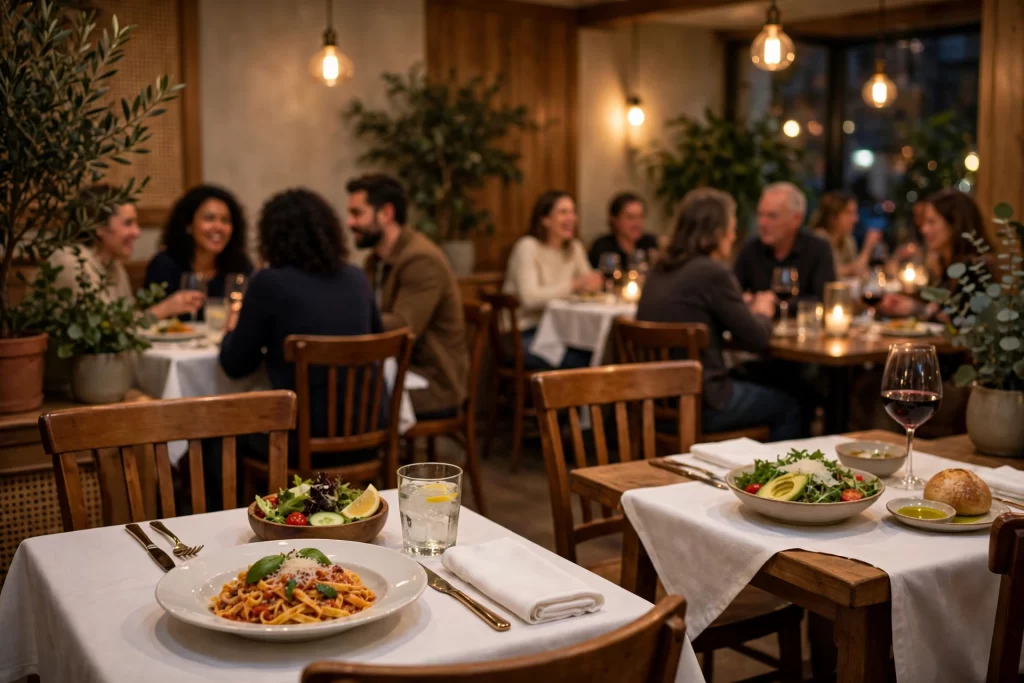
Ask her how she measures success and she won’t point to a spreadsheet. For Lee, it’s a packed dining room, the hum of conversation, the feeling in the air when a restaurant is alive. That’s the real scoreboard.
That same willingness to gamble has shaped her restaurants from the start. She opened her first Katie’s Pizza in Clayton in 2008, in her twenties, while she was still wrestling with drugs and alcohol. Her father owned the building, but the vision was hers, from the black-and-white films on the walls to the fried artichoke salad to the fresh Italian cooking inspired by time she spent in Italy with her artist mother. When she later split from her father’s business, she refused to give up the name, and a successful crowdfunding campaign helped her open a place of her own, eventually growing to three more locations.
Those early days were scrappy in ways diners never guessed. With no money for furnishings, the first restaurant was filled with pieces hauled over from her father’s junk shop after closing time. Guests assumed the mismatched look was a deliberate design choice. It was, in fact, the only option they could afford.
The polish came later, but the risk-taking never left. When the pandemic nearly forced layoffs, Lee’s team pivoted into packaged foods instead, a move that landed her products in Target stores nationwide after some trial and error. Now she’s preparing to open a 50,000-square-foot production facility in Bridgeton to support the growing grocery line, and her memoir, which began as journal entries and chapters sold at her restaurants before being shaped into a book in a three-month push, is on shelves at Target and bookstores alike.
None of it came easily. But Lee says the chaos of her childhood and young adulthood left her hungry and unafraid to risk everything for something bigger. As she puts it, every day still feels like living on the edge, and that’s exactly where she likes it.