An 18-foot golden sculpture hasn’t arrived at its new home yet, but it’s already at the center of a heated argument in St. Louis — one that’s now drawn in Missouri Attorney General Catherine Hanaway.
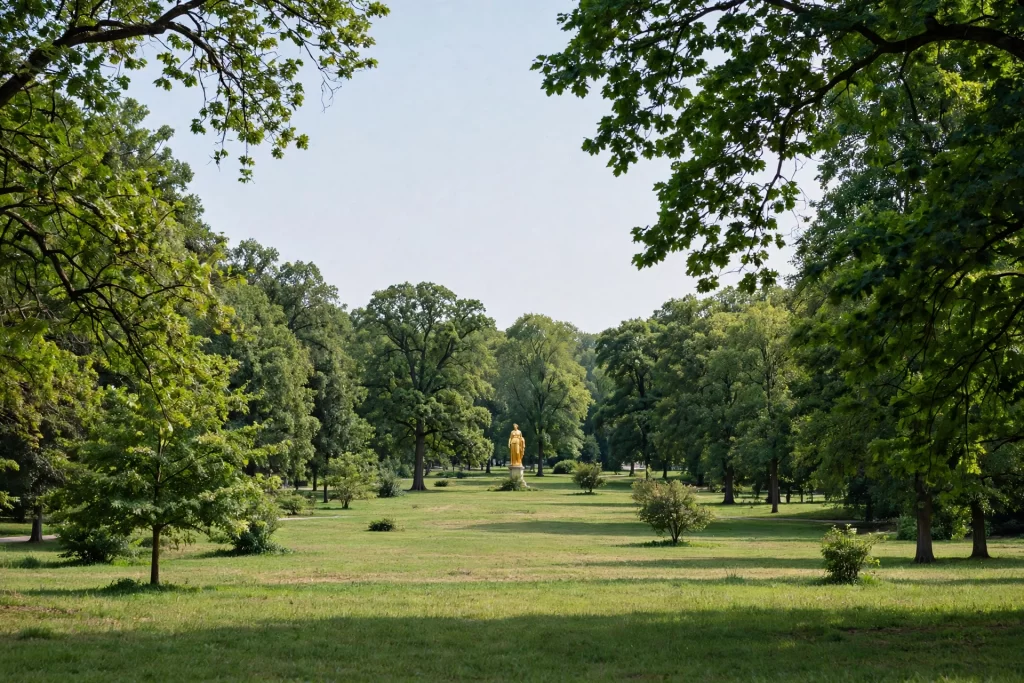
The piece, called “Witness,” is set to be installed outside the Fox Park offices of Rung for Women, a local organization that helps women build careers and grow professionally. The sculpture shows a golden female figure with braided hair, arms that taper into root-like forms, and a collar reminiscent of the one worn by the late Supreme Court Justice Ruth Bader Ginsburg.
Rung for Women says it has been preparing the grounds outside its building since September and is eager for the installation. In the organization’s view, the figure captures exactly what its members embody: strength, resilience, and determination as each woman pursues her own path.
Not everyone in the neighborhood sees it that way. Hanaway wrote on social media that some nearby residents have described the work as a “demonic affront to faith,” and she pointed to comments from the artist, Shahzia Sikander, who has said the piece draws on the spirit of women fighting for abortion rights.
Sikander, a Pakistani-American artist, has described the sculpture as a response to the loss of abortion access after the Supreme Court overturned Roe v. Wade in 2022, and as a tribute to generations of women who have fought for control over their own bodies.
Hanaway’s posts also noted the sculpture’s closeness to two churches in the area, including St. Francis de Sales Oratory, a traditional Catholic parish known for its Latin Mass. The church’s pastor did not respond to a request for comment. A spokesperson for Hanaway’s office declined to say how the sculpture came to the office’s attention.
This isn’t the first time “Witness” has sparked a backlash. When it went up at the University of Houston in 2024, a Texas anti-abortion group denounced it as satanic imagery meant to honor abortion and Ginsburg. A planned talk by the artist was called off, and months later the sculpture was beheaded during a hurricane — an act university police said they believed was deliberate. Sikander said at the time that she wanted the damage left visible rather than covered up.
The work is coming to St. Louis on permanent loan from the Gateway Foundation, a nonprofit that supports public art around the city. The foundation said it chose the piece first for its artistic merit and beauty, and also for what it says about women’s autonomy, belonging, and representation in public art. First shown in New York’s Madison Square Park in 2023, it will be among the very few statues in St. Louis depicting a woman who isn’t a historical figure — a natural match, the foundation said, for an organization devoted to women building the future.
Hanaway hasn’t said whether her office plans any specific action. On social media she argued that the sculpture’s arrival happened in secrecy and that there should have been community input and a process that didn’t unfold “under the radar.”
The clash is the latest chapter in America’s long-running arguments over public monuments. Statues of figures like Robert E. Lee and Christopher Columbus have come down in cities across the country in recent years, and while those fights have quieted somewhat, they show no sign of disappearing for good.