
When Kenneth Sandrell’s house burned down in February 2025, he floated a few ideas for the vacant lot: tiny homes, maybe a park for the neighborhood kids. What the property became instead — depending on who you ask — is an unlicensed mini car lot or an illegal parking lot. And now it’s one of 173 properties the city has filed foreclosure lawsuits against, making Sandrell’s lot a small-scale demonstration of some big new legal muscle at City Hall.
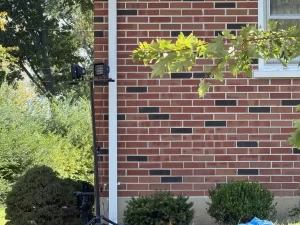
Here’s how we got here. Sandrell, 49, a St. Louis native, bought the small vinyl-sided home in January 2024 for just $11,000, on a Bevo Mill block where homes typically go for $100,000 to $200,000. It’s a stretch of the neighborhood about halfway between St. Mary’s High School and Morgan Ford Road, where most homeowners keep things tidy — the kind of block where bungalows wear oversized inflatable witches and pumpkin flags in October. He grew up in the area; his mom still lives nearby.
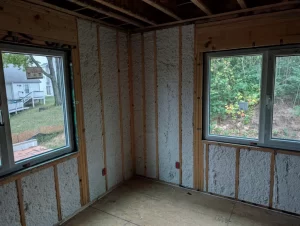
The inside was another story. The house had no power when he bought it. His plan to live in an apartment while he fixed it up fell through, so he ended up living in the house mid-rehab, running a generator around the clock just for power, heat, and air conditioning. “A nightmare,” he calls it. Neighbors agree — Jeannette, who has lived on the block for 49 years, says the generators ran “all the time,” and her daughter Jennifer says the racket was especially hard on the elderly woman whose backyard backed up to Sandrell’s lot.
In November 2024, city inspectors failed Sandrell’s DIY electrical work and noted the house looked like a full gut rehab needing permits. Those permits were never pulled. Sandrell disputes the city’s take on the wiring.
Then came the fire. Sandrell says he has neuropathy in his hands after a car accident that left him in a coma for 48 days. When he used a small pry bar to open a can of spray paint, he punctured the can. It was winter, and he tossed it out the front door so it wouldn’t coat the rehab-in-progress in black paint. The aerosol met the propane heater and ignited. He lost a cat in the fire. “It crushed my soul, and she was such a good cat.”
Sandrell blames the city, at least indirectly — he says exposed insulation fueled the blaze and he wanted to put up drywall but was never given a permit. The city says he never applied for one.
Even with the house gone, the nuisance stuck around. The property has drawn 43 complaints to the Citizens’ Service Bureau, from public nuisance to derelict cars to unpermitted work. A recent visit found four cars on the gravel patch where the house once sat. Neighbors say the cars appear to be for sale and that buyers are being brought by in the middle of the night, with flashlights sweeping over the vehicles. Sandrell insists it’s not a car lot — just where he parks his cars. One is a 1958 Cadillac he hopes to get running and eventually sell; another is a minivan with a smashed-in windshield he’s hunting a replacement for; a Hummer and a Mercedes he bought at auction from the city tow lot. “Nothing’s wrong with them,” he says. “They’re just sitting there.”
The foreclosure is the part worth watching. Sandrell owes the city $10,262 — back taxes, penalties, interest, fines, and fees. The biggest chunk, $7,558, comes from fines and fees that a pair of relatively new laws made foreclosable: money the city spends cutting a derelict lot’s grass or boarding its windows, assessed right back to the owner. Until recently, the city only had small fines for ordinance violations and little real way to force payment. Now, if the fines go unpaid, a judge can order the property sold on the courthouse steps.
Most of the 173 suits filed last week target developer Paul McKee’s Northside Regeneration properties — part of the city’s push to wrest parcels from the failed North City revitalization bid. Sandrell’s single property is modest by comparison, but that’s exactly the point Alderwoman Anne Schweitzer’s office is making: the new tools work on a single problem lot, too. Schweitzer, whose Ward 1 includes the property, says it’s been on the city’s radar for a while. Jeannette and Jennifer were glad to hear about the foreclosure effort. “He’s got all that junk bringing property values down,” Jeannette says.
Sandrell says he intends to fight it. He believed he still had time to appeal before the suit landed, and he’s not done arguing — about the fines, the demo bill the city handled and he never paid, or much else.
One burned-out house, one gravel lot, four cars, and a brand-new legal playbook. Bevo Mill is about to find out how far it goes.